

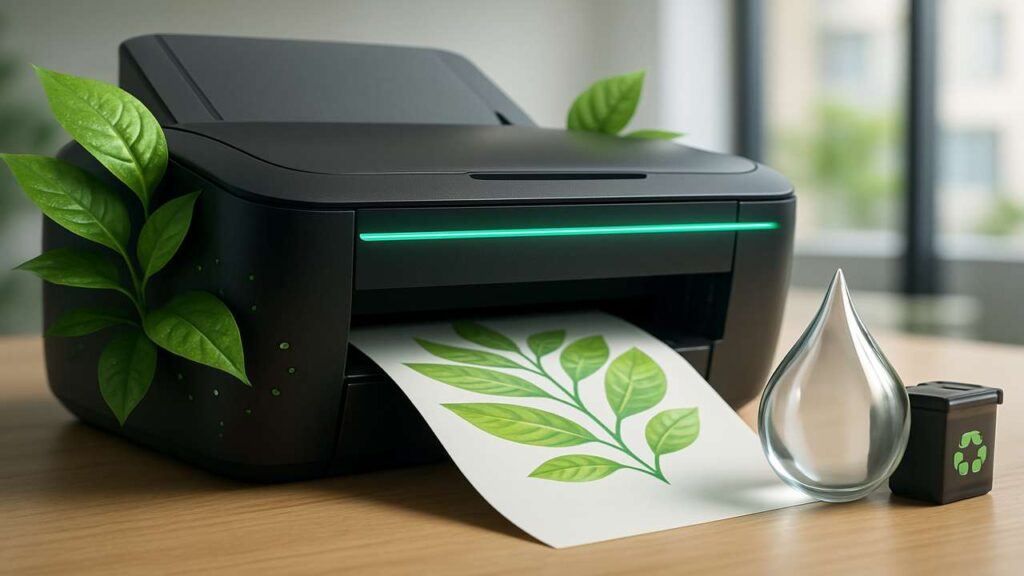
The Top Sustainable Printing Trends to Watch in 2025
As environmental concerns dominate global priorities, sustainable printing has emerged as a critical focus for businesses and consumers alike. In 2025, the printing industry is undergoing a green revolution, driven by innovations like biodegradable ink , remanufactured cartridges , and AI-powered optimization . These trends are reshaping how we approach print, balancing productivity with planetary responsibility. Below, we explore the most impactful sustainable printing developments of the year and their real-world applications.
1. Biodegradable Ink: A Breakthrough in Eco-Friendly Printing
Traditional inks often contain harmful chemicals that resist decomposition, contributing to long-term environmental damage. In 2025, biodegradable ink is gaining traction as a game-changer in sustainable printing . Made from plant-based pigments and water-soluble binders, these inks break down naturally, reducing landfill waste and chemical runoff.
Key Advantages:
- Non-Toxic Formulation : Safe for use in food packaging and children’s products.
- Low Carbon Footprint : Production processes emit 30–40% less CO₂ compared to petroleum-based inks.
- Compatibility : Works seamlessly with modern laser and inkjet printers.
Solutions for Adoption:
- Partner with suppliers offering certified biodegradable ink options (e.g., Epson EcoTank or HP Bio-Ink).
- Educate employees on proper disposal methods to maximize environmental benefits.
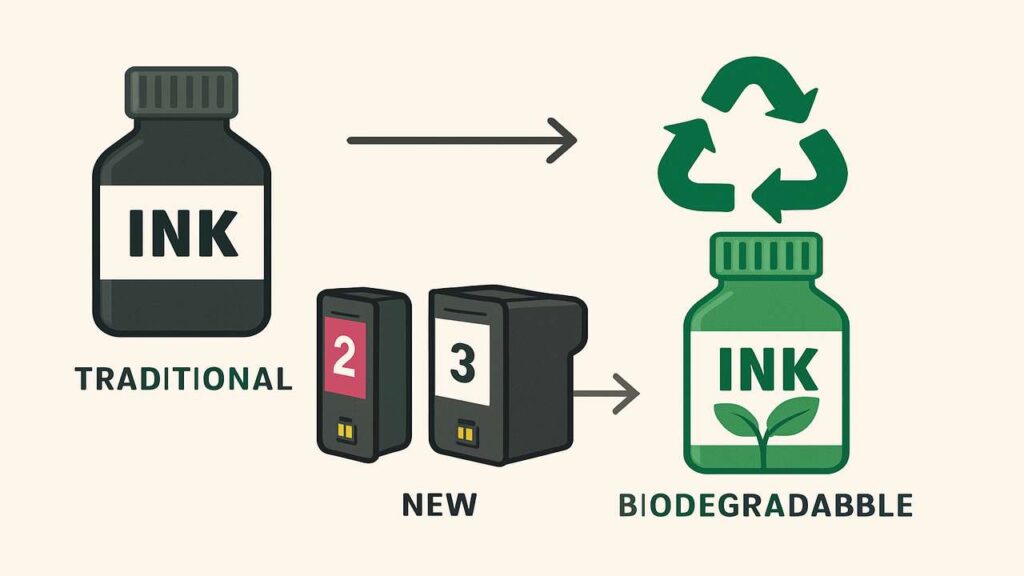
Why This Matters for Sustainable Printing:
Biodegradable ink directly addresses the issue of plastic and chemical waste, aligning with global regulations like the EU’s Circular Economy Action Plan.
2. Remanufactured Cartridges: Reducing Waste at Scale
The rise of remanufactured cartridges is a cornerstone of sustainable printing in 2025. Unlike disposable cartridges, remanufactured ones are professionally refurbished, extending their lifespan and reducing raw material consumption.
How It Works:
- Used cartridges are collected and inspected for damage.
- Components like chips and drums are replaced or cleaned.
- Refilled with high-quality toner and tested for performance.
Benefits:
- Cost Savings : Up to 50% cheaper than OEM cartridges.
- Waste Reduction : Prevents 1.5 million tons of e-waste annually.
- Performance Parity : Modern remanufactured cartridges match OEM quality.
Solutions for Adoption:
- Use certified remanufacturers (e.g., Staples Remanufactured or Canon Eco-Cartridges).
- Implement corporate recycling programs to collect used cartridges for reuse.
Why This Matters for Sustainable Printing:
By 2025, remanufactured cartridges account for 35% of global toner cartridge sales, proving their scalability and reliability.
3. Circular Economy Models: Closing the Loop in Printing
The circular economy is no longer a buzzword—it’s a business imperative. In 2025, companies are adopting closed-loop systems where printer components are reused, recycled, or repurposed.
Examples of Circular Practices:
- Take-Back Programs : Manufacturers like Xerox and Ricoh offer free returns for used cartridges and printers.
- Modular Design : Printers built with replaceable parts (e.g., fusers, rollers) reduce e-waste.
- Upcycling : Old printer casings are transformed into furniture or office supplies.
Solutions for Adoption:
- Choose printers with circular design certifications (e.g., EPEAT Gold or Cradle to Cradle).
- Collaborate with local recycling hubs to process end-of-life equipment.
Why This Matters for Sustainable Printing:
Circular models cut resource extraction by 60% and align with corporate ESG (Environmental, Social, Governance) goals.
4. AI-Driven Print Optimization: Efficiency Meets Sustainability
Artificial intelligence is revolutionizing sustainable printing through smart resource management. In 2025, AI tools analyze usage patterns to minimize waste and energy consumption.
Key Applications:
- Toner Usage Analytics : AI adjusts print settings to reduce toner waste by up to 30%.
- Predictive Maintenance : Alerts users to replace worn parts before they cause jams or misprints.
- Cloud Integration : Automates print jobs to avoid double prints and paper waste.

Solutions for Adoption:
- Use AI-powered platforms like Google Cloud Print or Konica Minolta’s AI Print Manager.
- Enable “Draft Mode” for internal documents to save toner and paper.
Why This Matters for Sustainable Printing:
AI reduces energy use by 20–25% per printer, making it a cost-effective solution for large-scale operations.
Frequently Asked Questions (FAQs)
Q1: Is biodegradable ink as effective as traditional ink?
A: Yes! Modern biodegradable inks offer comparable color vibrancy and durability, with the added benefit of full decomposition within 6–12 months.
Q2: Can remanufactured cartridges damage my printer?
A: No. Certified remanufactured cartridges undergo rigorous testing to ensure compatibility and performance. Always choose reputable brands.
Q3: How does the circular economy apply to printing?
A: It involves reusing, recycling, and repurposing printer components to eliminate waste and reduce reliance on new materials.
Q4: Does AI print optimization require expensive software?
A: Many AI tools are integrated into modern printers or available at low cost via cloud platforms. Start with built-in features like toner-saving modes.
Q5: Are sustainable printing practices cost-effective?
A: Absolutely. Businesses report 15–20% savings on print costs and improved brand reputation by adopting green printing solutions.
Final Thoughts
In 2025, sustainable printing is no longer optional—it’s a competitive advantage. From biodegradable ink to AI print optimization , the industry is proving that eco-friendly practices can coexist with efficiency and profitability. By embracing remanufactured cartridges , supporting the circular economy , and leveraging smart technologies, businesses can reduce their environmental footprint while staying ahead of regulatory and consumer demands.
Let me know if you need further adjustments!